
Copy Trading & Bots
OKX Copy Trading Fees Explained: Profit Sharing, Trading Fees and Slippage
A practical guide to OKX copy trading costs: standard trading fees, lead-trader profit sharing, slippage, spread protection and Futures funding.
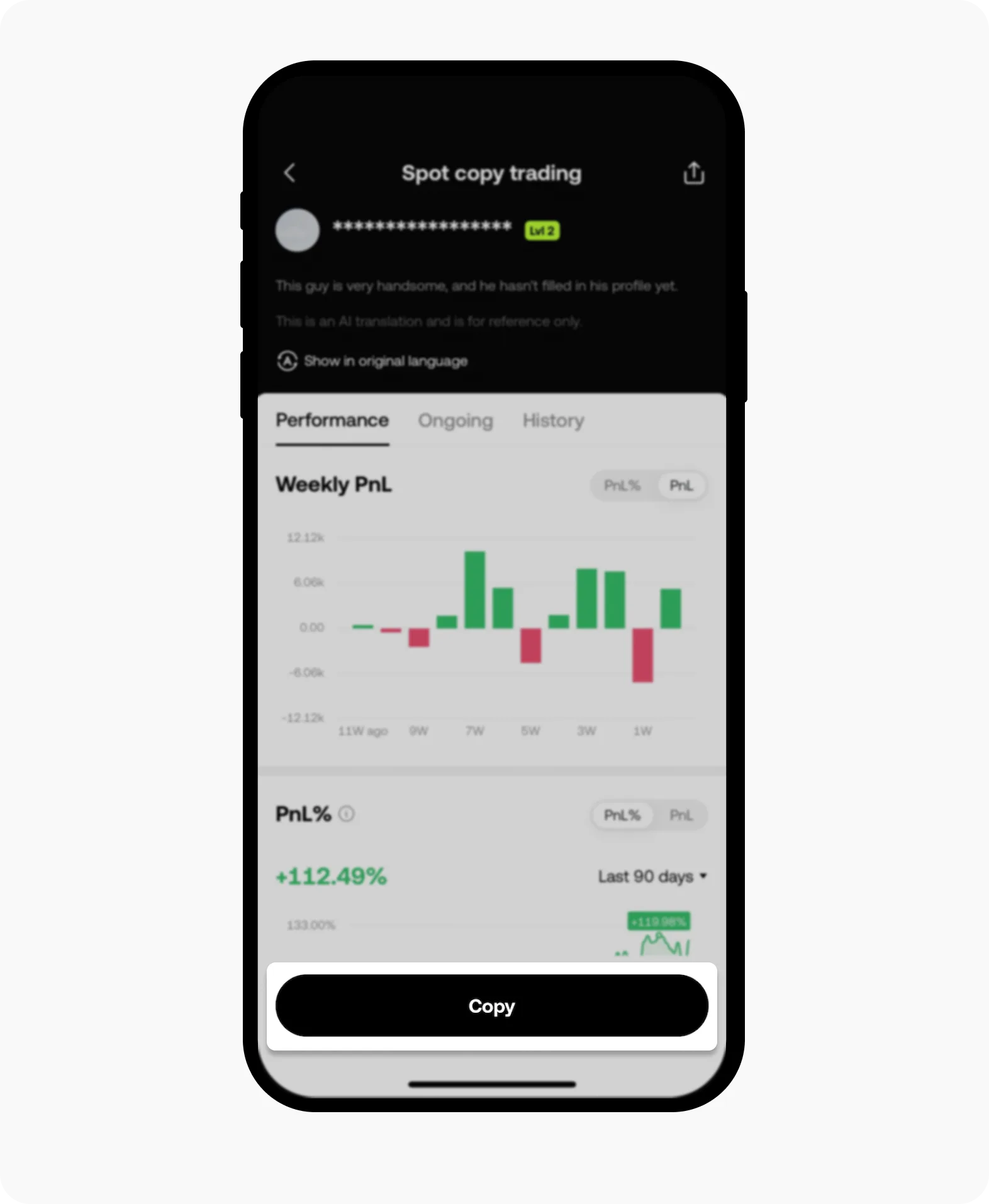
OKX copy trading fees are not one flat charge. A copier normally faces the same trading fees as their regular fee tier, a lead-trader profit share when eligible trades finish in profit, and execution costs such as spread or slippage. Futures copiers may also pay or receive funding. The practical question is therefore not “Is copy trading free?” but “What remains after every cost is deducted?”
Quick answer: before copying, record the profit-sharing ratio displayed for that lead trader, check your own trading-fee tier, identify whether the strategy is Spot or Futures, and allow for execution differences. Do not rely on a percentage quoted in an old review: the ratio and rules can depend on the trader, product, account and region.
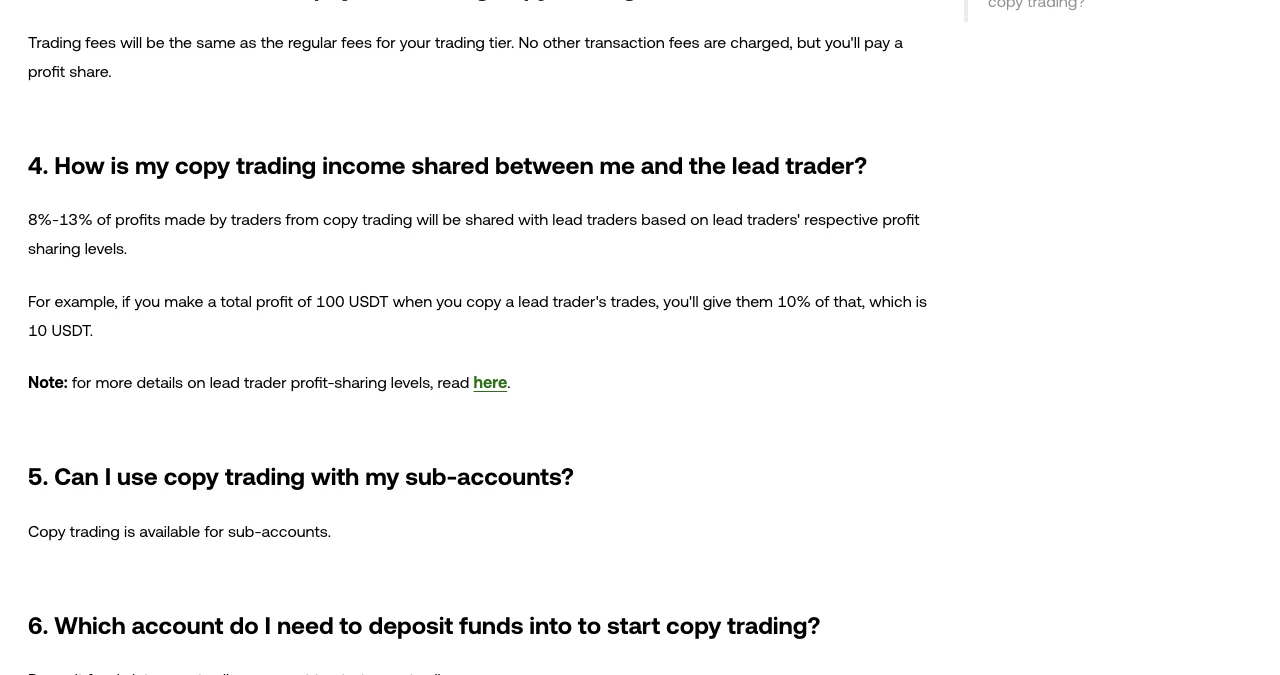
The screenshot is from the public OKX Copy Trading FAQ, checked on August 26, 2026. The page warns that its product rules may not apply to every customer, so confirm the values shown in your own account.
The four costs to separate
1. Regular trading fees
OKX states that copy trades use the regular trading fees for your account tier. That means the cost is generated when copied orders execute; it is not a special subscription fee for pressing Copy. Your actual rate may depend on the market, maker/taker treatment and fee tier.
Turnover matters as much as the headline rate. A lead trader who opens and closes positions frequently can generate more fee-bearing executions than a slower trader, even when both finish with the same displayed return. Check your current rate on OKX rather than borrowing another user's VIP rate or an old fee table.
2. Lead-trader profit sharing
Profit sharing is separate from trading fees. The public OKX FAQ checked for this guide shows an 8%–13% range based on the lead trader's profit-sharing level. Treat that as evidence for that page and date, not a universal promise: use the ratio displayed on the lead trader's profile or copy-confirmation screen for your account.
OKX's profit-sharing rules explain two details that are easy to miss:
- Trading fees are deducted before the eligible profit share is calculated.
- Profits and losses from copied orders can offset each other during settlement; excess amounts withheld from winning orders are returned when the final amount owed is lower.
Settlement can also be delayed while linked copy positions remain open. A pending deduction is therefore not always the final amount transferred to the lead trader.
3. Spread and slippage
Copying cannot guarantee the lead trader's exact execution price. The lead order reaches the market first; your copied order follows. During that interval, price and available liquidity can change. The difference is slippage, and it can reduce a copier's result even though it does not appear as a line named “copy fee.”
The same OKX FAQ describes 0.5% spread protection when a copied position opens: if the copier's opening price exceeds that threshold relative to the lead trader's opening price, the copied order will not be placed. That protection limits one type of price gap; it does not guarantee identical fills or eliminate exit slippage. Treat the current in-product rule as authoritative if it differs from the public FAQ.
4. Futures funding and liquidation costs
A Futures copy can add perpetual funding payments and liquidation risk. Funding is not a platform copy fee: it is a periodic transfer between long and short positions, and the interval can vary by contract. Our guide to how perpetual funding affects position cost shows how to check the contract-specific rate before holding a copied position through a funding timestamp.
Spot copy trading does not use leverage or liquidation in the same way. Decide which product you are evaluating before comparing two lead traders' returns.
A net-return formula you can actually use
For a closed set of copied trades, use this simplified review:
copier result after costs
= realised trading PnL
- trading fees
- eligible lead-trader profit share
- net funding paid (Futures only)
- adverse slippage impact
This is a review framework, not OKX's settlement engine. Taxes, currency conversion and other account-specific effects are outside it.
Here is a deliberately simple illustration. If the eligible profit after trading fees is 100 USDT and the lead trader's displayed sharing ratio is 10%, the profit share is 10 USDT and 90 USDT remains before any funding, slippage or tax effect. The 10% is an example, not a claim about every lead trader.
Do not multiply the sharing ratio by the amount you deposited. Profit share applies to eligible profit under the platform's rules, not to the full copy allocation.
Five checks before you press Copy
- Write down the displayed sharing ratio. Capture the value on the final copy setup screen, not a number from a third-party comparison.
- Check your own fee tier. Estimate how many entries and exits the strategy makes; high turnover makes a small per-trade rate matter.
- Choose Spot or Futures deliberately. If it is Futures, include funding, leverage, margin mode and liquidation in the risk budget.
- Set an amount and total stop loss you can afford to lose. Cost estimates do not protect principal when the strategy itself loses.
- Compare copier results with lead-trader results. A persistent gap can signal timing, slippage or different account constraints.
Costs are only one part of selection. Use our lead-trader review checklist to examine drawdown, holding period, order history and copier results before allocating funds. Then read the structural risks of copy trading for the problems a fee calculation cannot capture, including timing gaps, leverage and crowding.
Common mistakes when estimating the cost
- Calling it “zero fee” because there is no copy subscription. Trading fees and profit sharing still reduce the result.
- Using the lead trader's return as your expected return. Your entry time, fill price, allocation and limits can differ.
- Applying profit share to every profitable order in isolation. OKX describes netting and settlement rules that can change the final amount owed.
- Ignoring open positions. Profit-sharing settlement may wait until linked positions close.
- Forgetting turnover. Two traders with the same monthly PnL can impose very different trading-fee totals.
- Treating spread protection as a fill guarantee. A copied order can fail, and successful orders can still execute at a different price.
FAQ
Does OKX charge an extra transaction fee just for copy trading?
The public FAQ says regular trading-tier fees apply and no additional transaction fee is charged, but profitable copy trades are subject to profit sharing. Always verify the rule shown for your account and region.
Is profit sharing charged when the copied trades lose money overall?
OKX says profits and losses are offset during settlement. Withholding can occur on profitable orders, but an excess is returned when the final profit share owed is lower. Read the current settlement record rather than assuming every temporary deduction is final.
Can my result differ from the lead trader even when no order fails?
Yes. Different entry timing, execution price, account size, limits, fees and funding can produce a different result. Copying automates order instructions; it does not clone another account's economics.
Where can I check what was deducted?
OKX's spot-copy documentation directs users to Trading → Transactions → Transaction types → Other for profit-sharing details. Menu names can vary by product, app version and region, so use transaction history and the copy-trading record shown in your account.
Official references
- OKX Copy Trading FAQ — trading fees, displayed profit-sharing range, spread protection and copy-order constraints; updated August 11, 2026 on the page checked.
- OKX lead-trader profit-sharing rules — fee-first calculation, netting, withholding returns and settlement timing; checked August 26, 2026.
- OKX spot copy-trader guidelines — Spot order rules, transaction-history path and settlement explanation; checked August 26, 2026.
Copy trading involves loss risk, and Futures copying can result in liquidation. This article is educational information, not financial advice or a recommendation to copy any trader.